



How to Care for 14k Gold Fill: Clean, Store & Protect
Table of Contents
- What Is 14k Gold Fill and Why It Needs Care
- Gold Filled vs Gold Plated: What's the Difference
- How to Clean Gold Filled Jewelry at Home
- How to Store Gold Filled Jewelry to Prevent Tarnish
- Managing Humidity, Moisture, and Chemical Exposure
- Repair and Restoration: When to Seek Professional Help
- Travel-Specific Care for 14k Gold Fill Jewelry
- Frequently Asked Questions
Last Updated: September 20, 2026
What Is 14k Gold Fill and Why It Needs Care
14k gold fill is a layered metal made by heat- and pressure-bonding a thick layer of 14-karat gold to a brass core, making it more durable than plating but still vulnerable to moisture, chemicals, and friction. At Gilded Girl Accessories, every hand-sculpted piece is meticulously crafted from 14k rose gold fill, sterling silver, or stainless steel, often incorporating reclaimed textiles and intricate hand-beading.
Gold Filled vs Gold Plated: What's the Difference
The difference is how thick the gold layer is and how it's attached. Gold filled jewelry carries a bonded gold layer that is a measurable fraction of the piece's total weight; gold plated jewelry has a microscopic electroplated coating.
That distinction drives everything about care:
- Gold filled: thicker gold layer, mechanically bonded to a brass core, resists wear for years with basic maintenance
- Gold plated: thin electroplated coating, wears through at friction points, needs far gentler handling
- Base metal: the brass or alloy underneath, which is what actually tarnishes when exposed
How to Clean Gold Filled Jewelry at Home
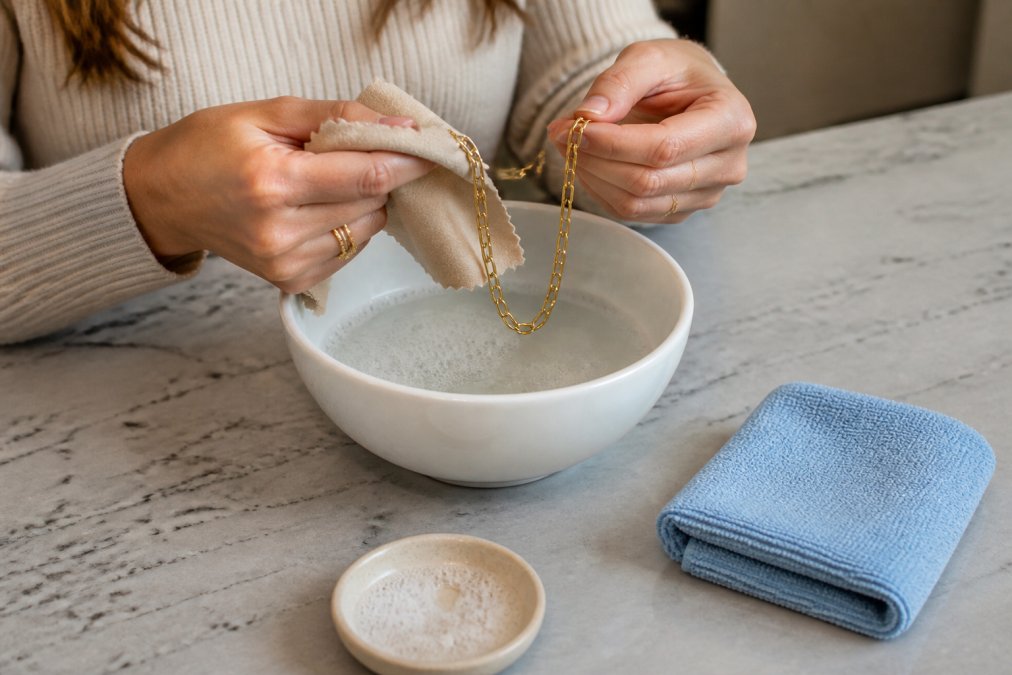
Learning how to clean gold filled jewelry at home takes ten minutes and two things you already own: mild dish soap and lukewarm water. The goal is to lift oils and grime without scrubbing the gold layer.
Daily Cleaning Routine
A daily wipe-down is the most effective tarnish prevention. After you take a piece off, run a soft polishing or dry microfiber cloth over the surface to remove oils and perspiration before they set.
Deep Cleaning Method
For a deeper clean, follow these steps once every few weeks:
- Line a small bowl with lukewarm water and add a drop of mild dish soap
- Let the piece soak for two to three minutes to loosen buildup
- Agitate gently with your fingers, never a brush with stiff bristles
- Rinse under lukewarm running water
- Pat dry completely with a microfiber cloth, then let it air-dry before storing
What to Avoid
Abrasive chemicals are the fastest way to dull a gold layer. Keep these away from your jewelry:
- Chlorine and salt water, which corrode the brass core through micro-gaps
- Perfume, hairspray, and lotion, which leave residue that traps moisture
- Ammonia-based and abrasive household cleaners
- Baking soda or toothpaste scrubs, which scratch the surface
How to Store Gold Filled Jewelry to Prevent Tarnish
Store gold filled jewelry in an air-tight container, individually, away from humidity and direct light. Air exposure drives oxidation, so cutting off airflow is half the battle.
Why Air-Tight Storage Works: The Mechanism
Tarnish is a chemical reaction, not a coating failure. The brass core's copper and zinc react with oxygen and moisture to form copper oxide and zinc oxide, the dull, dark film you see. At edges, clasp joints, and friction points, airborne moisture reaches the base metal, so sealing the piece away starves that reaction of oxygen and water vapor.
A Storage System That Actually Works
A few storage habits that protect the gold layer:
- Use an air-tight jewelry box or a zip-top pouch with a tarnish-resistant lining. Look for bags marketed as "anti-tarnish" with a copper-colored or gray interior, that's the activated carbon layer doing the work.
- Store each piece separately so beading and textiles don't rub against metal. Friction is the second enemy after moisture: every rub wears down the gold layer at high-contact points.
- Add a silica gel packet to the box for humidity control. Replace it every two to three months, or recharge it in a low oven (around 200°F for an hour) if reusable.
- Keep pieces out of bathrooms, where steam and moisture linger. A single hot shower can raise the humidity in a small bathroom above 80%, enough to accelerate oxidation on exposed base metal.
- Avoid storing on open hooks or jewelry trees for long periods. Hanging exposes the full surface to air and lets pieces knock against each other.
For pieces with intricate hand-beading or reclaimed textiles, lay them flat rather than hanging so the metal's weight doesn't stretch delicate thread. Wrap the metal portion in a soft cloth before pouching so the textile doesn't wick moisture toward the gold layer.
The Humidity Factor
In humid climates, the Southeast, Gulf Coast, or anywhere with summer dew points above 60°F, airborne moisture is the primary tarnish driver. A small rechargeable dehumidifier in your jewelry drawer makes a measurable difference. Pair it with air-tight storage to cut off both moisture and oxygen.
Managing Humidity, Moisture, and Chemical Exposure
Humidity and chemical exposure are the two silent drivers of tarnish. Moisture reacts with the brass core wherever the gold layer is thinnest, and everyday chemicals speed that reaction up.
The Chemistry of Tarnish: Why Specific Substances Attack Gold Fill
The brass core is an alloy of copper and zinc, both reactive. With oxygen and moisture they form copper oxide and zinc oxide, the dull, dark film you see. The reaction accelerates with certain chemicals:
- Sulfur compounds (found in perfumes, hairspray, and even some lotions) react directly with copper to form copper sulfide, which is the black tarnish you see on silver and copper. This is why perfume is the single most damaging thing you can put on gold filled jewelry.
- Chlorine (pools, tap water, household cleaners) is an oxidizing agent. It strips electrons from the copper and zinc in the brass core, accelerating oxidation and causing the pitting and discoloration that can appear after a single swim.
- Acids (sweat, citrus, vinegar-based cleaners) lower the pH at the metal surface, speeding up oxidation. Sweat is slightly acidic (pH around 4.5 to 6.5), which is why pieces worn daily against skin tarnish faster than pieces worn occasionally.
- Ammonia (glass cleaners, some jewelry cleaners) attacks copper directly and can strip the gold layer's luster.
The Order of Operations That Protects Your Jewelry
Preventative care means controlling humidity and chemical exposure. The most effective habit: apply lotion, perfume, and sunscreen before the jewelry goes on, not after. Here's the sequence:
- Shower and dry off completely. Moisture trapped under jewelry is the most common cause of tarnish.
- Apply lotion, sunscreen, and perfume. Let each product absorb and dry fully, usually 5 to 10 minutes.
- Put on your jewelry last. This keeps the chemicals off the metal entirely.
- Take jewelry off first at night. Before you wash your face, remove your pieces so they don't sit in soap and water.
Humidity Control by Climate
Humidity control isn't one-size-fits-all:
- High humidity (Southeast, Gulf Coast): Use a dehumidifier plus air-tight storage. Consider a rechargeable desiccant canister that you plug in monthly to dry out.
- Moderate humidity (Mid-Atlantic, Midwest): Air-tight storage with a silica packet is usually enough.
- Low humidity (Southwest, Mountain West): Humidity is less of a concern, but dry air can make textiles brittle, keep those pieces in a soft cloth.
What to Do When Tarnish Appears
At the first signs of tarnish, a dull film or slight darkening, act quickly. A gentle polishing-cloth wipe often removes it before it sets. If it's been there a while, a short soak in lukewarm water with a drop of mild dish soap, then a soft-cloth dry, usually restores the shine. Avoid abrasive rubbing, which wears away the gold layer.
Repair and Restoration: When to Seek Professional Help
Most gold filled jewelry can be restored at home: surface tarnish, dullness, and light oxidation respond well to gentle cleaning and a polishing cloth.
Travel-Specific Care for 14k Gold Fill Jewelry
Travel exposes jewelry to tarnish conditions: humidity changes, sweat, sunscreen, and chlorinated pools. A little planning keeps pieces safe on the road.
| Situation | Risk | Fix |
|---|---|---|
| Pool or ocean swim | Chlorine and salt corrode base metal | Rinse with fresh water, dry fully |
| Sunscreen and sweat | Residue traps moisture | Wipe nightly with microfiber cloth |
| Packed loose in a bag | Friction scratches the gold layer | Store each piece in its own pouch |
| Humid hotel room | Airborne moisture drives oxidation | Use an air-tight case with silica packet |
Frequently Asked Questions
How long will 14k gold-filled jewelry last?
With proper care, 14k gold-filled jewelry can last decades. The gold layer is mechanically bonded to a brass core, making it far more durable than plating. To maximize longevity, clean regularly with mild dish soap and lukewarm water, store in an air-tight container, and avoid harsh chemicals, chlorine, and salt water. Following these steps helps prevent tarnish and preserves the gold layer.
Can I shower with 14k gold-filled jewelry?
It's best to remove 14k gold-filled jewelry before showering. Soap scum, shampoo, and body oils can dull the surface, and repeated exposure to water and humidity may accelerate tarnish. If you do shower with it occasionally, dry it thoroughly with a soft cloth afterward. For daily wear, taking pieces off before bathing helps maintain shine and extends the life of the gold layer.
Does 14k gold-filled jewelry tarnish?
Yes, 14k gold-filled jewelry can tarnish over time, especially when exposed to moisture, chemicals, and body oils. The brass core may oxidize if the gold layer is compromised, but tarnish is usually surface-level and reversible. Regular gentle cleaning with mild dish soap and lukewarm water, plus proper storage in an air-tight container, prevents most tarnish and keeps your pieces looking new.
What is the best way to clean 14k gold-filled jewelry?
The safest method is to soak your jewelry in a mixture of mild dish soap and lukewarm water for a few minutes, then gently agitate with your fingers or a microfiber cloth. Rinse with clean water and pat dry completely. Avoid abrasive chemicals, ultrasonic cleaners, and chlorine, as these can damage the gold layer. For deep cleaning, repeat this process monthly or as needed.