



Are Reclaimed Textile Accessories Durable?
Table of Contents
- Understanding Reclaimed Textiles and Durability
- Fiber Integrity: How Reclaimed Materials Hold Up Over Time
- Reclaimed vs. Virgin Fibers: A Durability Comparison
- How to Care for 14K Gold Fill and Reclaimed Textile Pieces
- Benefits of Reclaimed Textiles in Jewelry Design
- How to Clean Handmade Fabric Jewelry for Lasting Wear
- Real-World Durability: What to Expect from Handmade Pieces
- Frequently Asked Questions
Last Updated: September 27, 2026
Understanding Reclaimed Textiles and Durability
Are reclaimed textile accessories durable? Yes, reclaimed textile accessories durable when properly sourced, constructed, and maintained. The short answer is yes, when they're sourced, constructed, and maintained properly. At Gilded Girl Accessories, we've spent years working with reclaimed textiles in jewelry design, and we've learned that durability depends far less on whether a fabric is new or reclaimed, and far more on fiber integrity, construction quality, and how the wearer treats the piece.
Reclaimed textiles come from existing garments, interior design fabrics, or deadstock inventory. They've already proven themselves in real-world conditions. The fibers haven't degraded simply because they're reclaimed; what matters is their original composition and the care taken during the recycling process. A reclaimed cotton damask fabric, for example, retains the same durability characteristics as virgin cotton if the fibers themselves remain intact.
The circular economy argument for reclaimed textiles is compelling, but it doesn't automatically guarantee durability. That's where the engineering comes in. How a designer incorporates these materials, whether they're protected from friction, properly sealed, or reinforced at stress points, determines whether a piece will last months or years.
Fiber Integrity: How Reclaimed Materials Hold Up Over Time
Fiber integrity is the foundation of durability in any textile, reclaimed or not.
| Fiber Type | Tensile Strength Impact | Wear Resistance | Best For |
|---|---|---|---|
| Reclaimed Cotton | Minimal loss | High | Everyday earrings, necklace accents |
| Reclaimed Linen | Minimal loss | High | Statement pieces, durable designs |
| Reclaimed Polyester | Moderate loss | Moderate | Decorative elements, protected areas |
| Reclaimed Nylon | Moderate to high loss | Moderate | Secondary design elements |
Reclaimed vs. Virgin Fibers: A Durability Comparison
The durability comparison between reclaimed and virgin fibers often surprises people. The difference isn't as dramatic as many assume.
What actually determines durability is the original quality of the fabric, not whether it's been recycled.
The advantage of reclaimed textiles in jewelry design is different: it's the uniqueness and the sustainability story. Durability-wise, you're working with proven materials that have already demonstrated their staying power in real-world applications. A vintage damask fabric that survived decades in a home is evidence that the fibers have genuine longevity.
One honest limitation: reclaimed materials are finite. If a specific reclaimed fabric is damaged or lost, you can't simply reorder it. This makes each piece genuinely one-of-a-kind, which appeals to collectors but also means replacement or repair becomes more complex. Virgin fibers offer consistency; reclaimed fibers offer authenticity and sustainability.

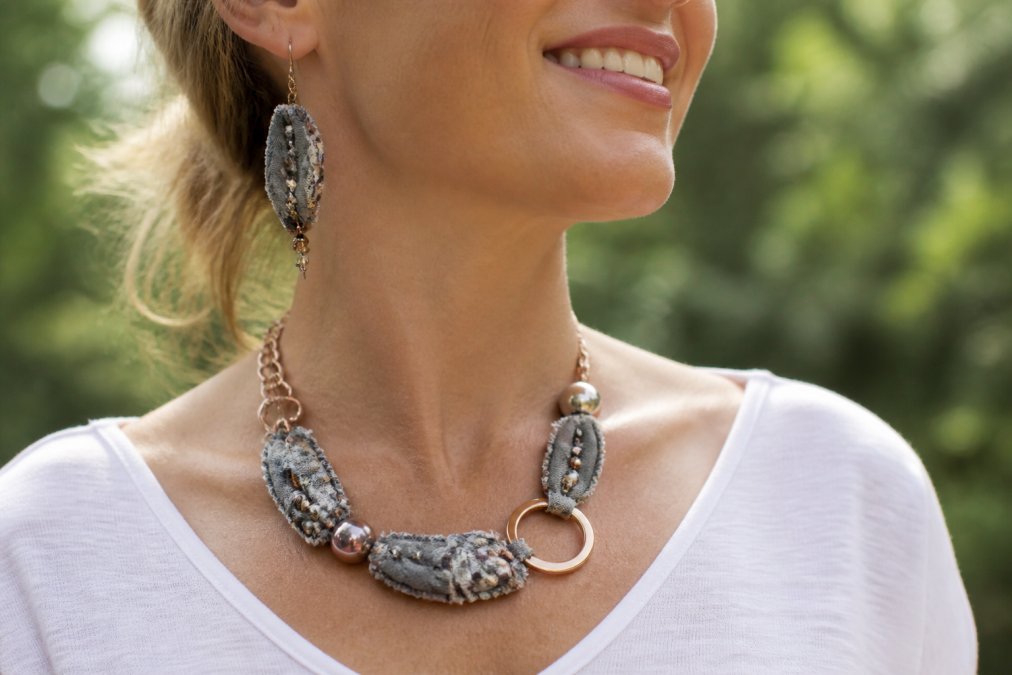
The cost-to-durability ratio often favors reclaimed textiles. You're paying for craftsmanship and uniqueness, not for inferior materials. Pieces from Gilded Girl Accessories, which incorporate reclaimed textiles like the Eliza Damask Shoulder Duster Earrings, are designed to last because the construction quality matches the material quality.

How to Care for 14K Gold Fill and Reclaimed Textile Pieces
Caring for jewelry that combines 14K gold fill with reclaimed textiles requires understanding both materials. Gold fill is a durable base metal core bonded with a layer of gold (Buying Platinum, Gold, and Silver Jewelry). It's more resistant to tarnishing than sterling silver, but it still needs protection from harsh conditions.
The textile component is more vulnerable to moisture, friction, and direct sunlight. Your care routine should prioritize protecting the fabric while maintaining the metal's shine.
Start with storage. Keep your pieces in a dry, cool place away from direct sunlight. Prolonged UV exposure fades reclaimed textiles faster than it affects virgin fabrics, not because they're recycled, but because they're often vintage and may have accumulated minor damage during their previous life. Use a soft cloth or a small jewelry box with compartments to prevent the fabric from rubbing against other pieces.
For cleaning, use a soft, dry cloth to wipe the metal after wearing. Never submerge pieces with reclaimed textile components in water or cleaning solutions. The fabric can absorb moisture, leading to mildew or mold growth. If the metal needs deeper cleaning, use a jewelry care cloth specifically designed for gold fill. Buff gently; aggressive polishing can wear through the gold layer over time.
Avoid perfume, lotions, and hairspray before putting on your jewelry. These products can stain or degrade both the fabric and the metal. The same applies to sweat; remove your jewelry before exercising or swimming.
Benefits of Reclaimed Textiles in Jewelry Design
The durability question often overshadows the real benefits of reclaimed textiles in jewelry. Yes, they're durable. But they also offer something mass-produced accessories can't: a genuine connection to sustainability and circular economy principles. This commitment to longevity extends beyond repurposed materials, as the durability of artist-designed goods reflects a similar dedication to craftsmanship that defies the cycle of disposable fashion.
When you wear a piece featuring reclaimed textiles, you're wearing a material that's already lived one life and been given another. That's the environmental footprint of textile waste reduction in tangible form. The fabric in your earrings or necklace didn't require new cotton to be grown, new petroleum for synthetic fibers, or new water and chemicals for dyeing.
Eliza Damask Shoulder Duster Earrings →
For consumers who care about sustainable fashion, this matters. Research from the Ellen MacArthur Foundation's circular economy research shows that textile waste represents one of the largest environmental challenges in fashion. Choosing jewelry with reclaimed textiles is a direct vote against that waste.
There's also an aesthetic benefit. Reclaimed fabrics often carry subtle color variations, weaving patterns, and visual character that mass-produced textiles can't replicate. Each piece is genuinely unique. The Eva Blue Damask Reclaimed Fabric Statement Necklace showcases this perfectly, the damask pattern and fabric texture create depth that modern synthetic textiles often lack.
For gift-givers, reclaimed textile jewelry offers a story. You're not just giving an accessory; you're giving something with a narrative. That resonates with the audience that values artisanal craftsmanship and meaningful purchases over disposable fashion.
How to Clean Handmade Fabric Jewelry for Lasting Wear
Cleaning handmade fabric jewelry requires a gentler approach than cleaning conventional metal jewelry. The fabric is the delicate component; the metal is secondary.
Start by understanding what you're cleaning. Handmade pieces typically combine metal wire or settings with fabric elements, often adorned with beading. Each component responds differently to cleaning methods.
For routine maintenance, use a soft, dry microfiber cloth. Wipe the metal gently to remove dust and oils from your skin. Don't press hard or rub aggressively, you're not trying to polish, just clean. This simple step prevents buildup that can dull the metal over time.
If the fabric looks dusty, use a soft brush with very fine bristles. Brush gently in one direction. Avoid circular motions, which can loosen fibers or damage beading. Never use a stiff brush; the bristles can snag or tear the fabric.
For stubborn stains on the metal, dampen a cloth with a tiny amount of water and a drop of mild dish soap. Wring it thoroughly so the cloth is barely damp, not wet. Wipe the metal quickly and dry immediately with another cloth. Keep the fabric away from moisture entirely.
Never soak, spray, or submerge pieces with fabric components. Water absorption is the enemy. Even if the fabric appears to dry, moisture trapped in the weave can lead to mold or mildew.
Beading requires special attention. Glass beads are durable, but they can loosen if the thread or wire holding them is stressed by moisture or aggressive handling. Avoid pulling or twisting beads while cleaning.
Real-World Durability: What to Expect from Handmade Pieces
Handmade jewelry with reclaimed textiles performs differently in real-world conditions than mass-produced alternatives. The difference comes down to construction and material quality, not the manufacturing method itself.
Frequently Asked Questions
How does the durability of reclaimed fabric compare to virgin materials?
Reclaimed textiles can be just as durable as virgin fibers when sourced from quality garments and properly incorporated into jewelry design. The key difference lies in fiber integrity at the time of reclamation. Pre-consumer waste (fabric scraps from manufacturing) typically retains full tensile strength, while post-consumer waste depends on the original garment's condition and care history. Handmade reclaimed textile accessories from artisans like Gilded Girl Accessories are constructed with reinforced metal components and careful stitching, which actually enhances durability compared to mass-produced alternatives. The reclaimed damask and chenille fabrics used in pieces like the Eliza Damask Shoulder Duster Earrings are selected specifically for their structural integrity.
What factors influence the lifespan of handmade textile accessories?
Lifespan depends on three primary factors: fiber quality at sourcing, construction method, and care practices. Reclaimed textiles sourced from high-quality vintage garments or pre-consumer manufacturing waste have longer lifespans than those from worn-out clothing. Hand-sculpted construction using sterling silver wire, 14K rose gold fill, and reinforced stitching creates stronger pieces than machine-made alternatives. Regular maintenance matters most: gentle cleaning, proper storage away from moisture and direct sunlight, and avoiding harsh chemicals extend life significantly. Most handmade fabric jewelry pieces worn with reasonable care last for years.
Are reclaimed textile accessories suitable for everyday wear?
Yes, reclaimed textile accessories designed for everyday wear are durable when constructed with quality materials and proper care. Pieces like the Eva Blue Damask Statement Necklace feature 14K rose gold fill chain and reinforced fabric attachment points specifically engineered for regular use. The reclaimed chenille and damask fabrics hold up well to daily exposure, though they require more care than solid metal pieces. Avoid prolonged moisture exposure, chlorine, and abrasive friction. Hand-beaded elements may need occasional touch-ups over years of wear, but the textile core remains stable. For active lifestyles, choose pieces with secure metal frameworks and recessed fabric placement.
What is the best way to maintain reclaimed textile jewelry long-term?
Maintain reclaimed textile jewelry by cleaning gently with a soft, dry cloth after each wear to remove oils and dust. Store pieces in a cool, dry place away from direct sunlight, which can fade reclaimed fabrics over time. Polish metal components monthly using a jewelry care cloth to maintain shine. Avoid exposing fabric elements to water, perfume, lotions, or harsh chemicals. If cleaning is needed, use a barely damp cloth with mild soap and air-dry completely. For pieces with glass beading like the Natasha Geometric Blue Chenille Earrings, inspect beads periodically for looseness.